

You spend months getting the inside of your home just right. The sofa is the perfect shade, the kitchen flows the way you wanted, the lighting is warm in all the right places. Then you step out the back door and it feels like you have walked into someone else’s property. A bit of patio, a stretch of lawn, a fence, and not much sense that any of it belongs to the house behind it. The fix doesn’t need a builder or a huge budget, just a few decisions made with the inside in mind.
Start With the Threshold Between Inside and Out
The point where the house meets the garden does most of the heavy lifting. If you have the budget, swap a standard back door for wide sliding or bi-fold glass doors so the view is uninterrupted even when everything is shut. Beyond that, look at your flooring. Running the same or a very similar surface from inside to outside makes the eye read both spaces as one. Keep the threshold as low and flush as possible. Anything under 15mm reads as a continuous floor; anything over 25mm and the eye starts to register it as a step. A big drop down breaks the spell instantly. A big step down breaks the spell instantly.
Match Materials, Colours and Textures
Visual continuity is what makes the garden feel like another room rather than a separate place. Pull the colours from your living room outside through cushions, planters, parasols and even the paint on garden furniture. If you have oak floors, bring timber outdoors in benches, screens or a deck. If there is exposed stone inside, echo it in pavers or a low garden wall. Keep the finishes honest to the rest of the house. Glossy plastic furniture sitting next to a pared-back, natural interior will always look like a mistake.
Create Outdoor Rooms With a Clear Purpose
A garden that is one big undefined patch of grass and paving rarely gets used. Break it into zones the way you would inside. A lounge corner with a weatherproof sofa, an outdoor rug and a couple of side tables. A dining area near the kitchen door so you are not walking food across the lawn. A quieter spot for morning coffee or a book. You do not need walls to separate them. A change in surface, a row of planters or a low hedge does the same job and keeps everything feeling open. If your garden is on the smaller side, many of the same tricks that make a small living room feel bigger apply outdoors too, from sticking to a tight colour palette to using vertical space well.
Add Shelter So You Can Use the Space Year Round
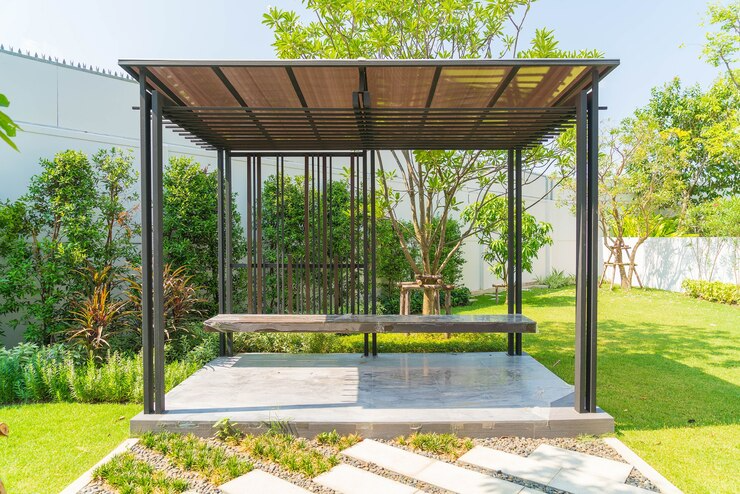
In the British climate, an outdoor space without cover sits empty for most of the year. A pergola is one of the simplest ways to introduce overhead structure near the house, and it doubles as a frame for climbing plants once they get going. For a typical UK garden, a footprint of around 3m by 3m fits a small dining set or a pair of sofas without dominating the space.
For something more permanent, a timber summer house or garden building turns the bottom of the garden into a proper retreat with four walls, a roof and a power supply if you want one.
A handcrafted timber building, like those from specialists such as elfords.co.uk gives you that sheltered second living space, built to match the proportions and feel of your home rather than dropped in like a generic flat pack. Most garden buildings of this kind fall under permitted development rules, but it is always worth checking the size and height limits before you order.
Soften the Boundaries With Planting
A solid fence shouts where your garden ends. Hedges, small trees and climbers do the opposite, giving privacy while keeping the space feeling alive. Use a trellis with jasmine or clematis to add height without taking floor space. Group potted plants near the back door so greenery spills right up to the threshold, blurring the line between paving and planting. The goal is for the eye to travel from the inside out without snagging on anything hard or abrupt.
Light It So It Works After Dark
The garden disappears the moment the sun goes down unless you light it well. Stick to warm bulbs that match the temperature of your indoor lighting, not the cool blue tone of standard outdoor security lights. Use path lights low to the ground, uplighters tucked into planting beds, and a string of festoon lights over the seating area. When the garden is lit softly in the evening, the view through your glass doors stays alive, and the inside of the house gains depth instead of reflecting back at you.
Bringing It All Together
A garden that feels like a real extension of your home is not about spending the most or planting the most. It is about consistency. The same flow of materials, colours and purpose that runs through your living room should carry on past the back door.
Start with the threshold, add zones, put a roof over at least one of them, and the rest falls into place. Get it right and you stop thinking of the garden as somewhere you go and start treating it as somewhere you already live.
